

The Rise, Reign, and Resurrection of a Rock ‘n’ Roll Institution
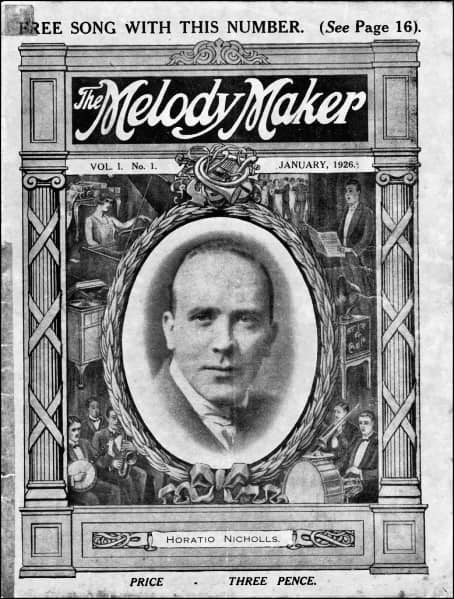
January 2, 2026, marks a century since the first issue of Melody Maker hit the newsstands. Had it survived the digital cull of the early 2000s, the “Maker” would be blowing out 100 candles today. For those who grew up with ink-stained fingers and a desperate need to know which way the wind was blowing in the London clubs, this isn’t just a date—it’s a centennial of the most influential musical document in British history.
From its 1926 origins as a technical sheet for jazz musicians to its 1990s peak as the acerbic, witty, and often chaotic voice of Britpop and Grunge, Melody Maker wasn’t just a magazine. It was a kingmaker, a provocateur, and the ultimate “musicians’ bible.”
The Birth of the Bible: Jazz, Swing, and the Early Years
When Lawrence Wright founded Melody Maker in January 1926, the world was a different place. The “Roaring Twenties” were in full swing, and the magazine’s initial mission was surprisingly practical: it was for the working musician. It offered sheet music, tips on instrument maintenance, and news for dance band leaders.
However, even in its infancy, the magazine had a nose for the “new.” It championed the arrival of Jazz in the UK, often acting as the sole bridge between the American greats—Duke Ellington, Louis Armstrong—and the British public. While the mainstream press viewed jazz with suspicion, Melody Maker treated it with the academic rigor and rebellious passion that would become its trademark.
The Classifieds: Where Legends Were Born
Perhaps the most enduring legacy of the early-to-mid century Melody Maker wasn’t its reviews, but its Classifieds section. Before the internet, if you wanted to start a band, you bought the Maker.
- 1966: A young guitarist named Mick Fleetwood and John McVie found their way into various lineups through these pages.
- 1967: Bill Bruford answered an ad that led to the formation of Yes.
- 1970: Rick Davies placed an ad for a new band; Roger Hodgson answered, and Supertramp was born.
The back pages of the magazine were essentially the LinkedIn of the rock world, responsible for more platinum records than most A&R scouts of the era.
The Golden Era: Competition and the “Inky” Wars
By the late 1960s and 70s, Melody Maker entered its most iconic phase. It was the era of the “Inky”—the oversized, newsprint weeklies that defined the British cultural landscape. Its primary rival was the New Musical Express (NME), and the rivalry was fierce.
While NME often leaned into the “pop” side of things, Melody Maker prided itself on being the more serious, technically-minded older brother. It embraced Progressive Rock with a fervor that bordered on the religious. If you wanted a twelve-page spread on the inner workings of Pink Floyd’s synthesizers or the rhythmic complexity of King Crimson, you turned to the Maker.
The 1970s: The Peak of Influence
The 70s saw the magazine reach its circulation zenith. It was the decade of the “star” journalist. Writers like Chris Welch, Richard Williams, and Allan Jones weren’t just reporting on the scene—they were part of it. They toured with Led Zeppelin, drank with Thin Lizzy, and engaged in intellectual sparring matches with David Bowie.
The magazine’s coverage of the 1972 Ziggy Stardust transition is still cited as a masterclass in music journalism. Melody Maker didn’t just review the music; they captured the shift in the cultural tectonic plates.
The Punk Schism: Adapt or Die
The arrival of Punk in 1976 nearly broke the magazine. For a publication rooted in “musicianship,” the raw, three-chord chaos of The Sex Pistols and The Clash felt like an affront. While the NME jumped on the punk bandwagon with reckless abandon, Melody Maker was initially hesitant.
However, this tension birthed some of the magazine’s most brilliant writing. The “old guard” of prog-lovers clashed with a new generation of writers like Jon Savage and Vivien Goldman, who saw punk as the necessary fire to burn down the “dinosaur” acts.
This internal conflict allowed Melody Maker to become the premier home for Post-Punk and New Wave. By the late 70s and early 80s, the magazine was the definitive source for the dark, moody brilliance of Joy Division, The Cure, and Siouxsie and the Banshees. It traded its technical obsession for a more avant-garde, artistic sensibility.
The 80s and 90s: The Wit and the War
As we moved into the 1980s, Melody Maker found a new identity. It became faster, funnier, and more biting. It was during this time that it fostered the careers of iconic writers like The Stud Brothers, Simon Reynolds, and Everett True.
The Birth of “Grunge” and the Everett True Era
It is a well-documented fact that Melody Maker played a pivotal role in bringing American Grunge to the UK. Everett True (Jerry Thackray) famously traveled to Seattle, befriended Kurt Cobain, and was the first to put Nirvana on a UK cover.
While other magazines were still mourning the end of the New Romantic era, the Maker was in a flannel shirt, shouting about Mudhoney and Soundgarden. This “boots on the ground” approach gave the magazine a renewed sense of urgency.
The Britpop Peak
The 1990s were the last great “hurrah” for the music weeklies. The battle between Blur and Oasis in 1995 sent circulation figures soaring. Melody Maker leaned into its role as the intellectual provocateur. It was often snarkier than the NME, more willing to tear down idols, and deeply invested in the “shambolic” end of the indie spectrum—championing bands like The Libertines and Suede long before they were household names.
The Digital Sunset: Why It Ended
The decline of Melody Maker is a cautionary tale of the digital revolution. By the late 90s, the rise of the internet began to provide news faster than a weekly print cycle could manage. Furthermore, the “lifestyle” magazines like Q and Select began to peel away readers who wanted glossy photos and polished features rather than the grit and ink-smudge of a broadsheet.
In a desperate move to stay relevant, Melody Maker transitioned from its traditional broadsheet format to a glossy magazine in 1999. It didn’t work. The soul of the magazine was tied to the newsprint. On December 24, 2000, the final issue was published. It was officially merged into its old rival, the NME, bringing an end to 74 years of independent history.
The Legacy: Why We Still Care in 2026
If you search for “Melody Maker” today, you won’t find a website with daily updates. You’ll find an archive. But why does a magazine that died 25 years ago still command such respect?
- The Discovery Engine: Before algorithms, we had editors. Melody Maker was an algorithm made of flesh, blood, and bad beer. It forced you to listen to things you didn’t know you liked.
- The Writing Style: It championed a style of “Gonzo” journalism that is rare today. The writers didn’t just interview a band; they lived the experience. The prose was often dense, poetic, and hilariously elitist.
- The Physicality: There was a ritual to the Maker. The smell of the ink, the way it turned your fingers gray, and the act of spreading it out on a train seat. It was a badge of identity.
How Melody Maker Influenced Modern Media
Today’s music blogs, YouTubers, and TikTok critics owe a debt to the Maker. The idea that music criticism should be an art form in itself—that a review can be as entertaining as the album—was perfected in the pages of Melody Maker.
The magazine’s focus on the “scene” and the “subculture” rather than just the “hit” is a blueprint for how modern niche communities operate online.
A Centennial Toast
As we look back from the vantage point of 2026, the absence of Melody Maker feels like a missing limb in the body of music culture. In an era of AI-generated reviews and hyper-curated Spotify playlists, we miss the human chaos of a weekly “inky.” We miss the scathing one-star reviews of bands that went on to be huge. We miss the classified ads that promised “vocalist wanted, must have own transport and no ego.”
Melody Maker was more than a magazine; it was the heartbeat of a century of sound. It survived the Great Depression, World War II, the birth of Rock, the death of Disco, and the rise of the Digital Age.
So, here is to the 100 years of the Maker. To the writers who stayed up all night, the photographers who caught the sweat on the brow of a young Hendrix, and the readers who saved their pocket money every Tuesday to see what the world sounded like.
Happy 100th Birthday, Melody Maker. You are still the loudest voice in the room.
Before playlists, streaming algorithms, or social media, Melody Maker was where new sounds were discovered, questioned, and sometimes challenged. It didn’t just report on music — it argued with it.