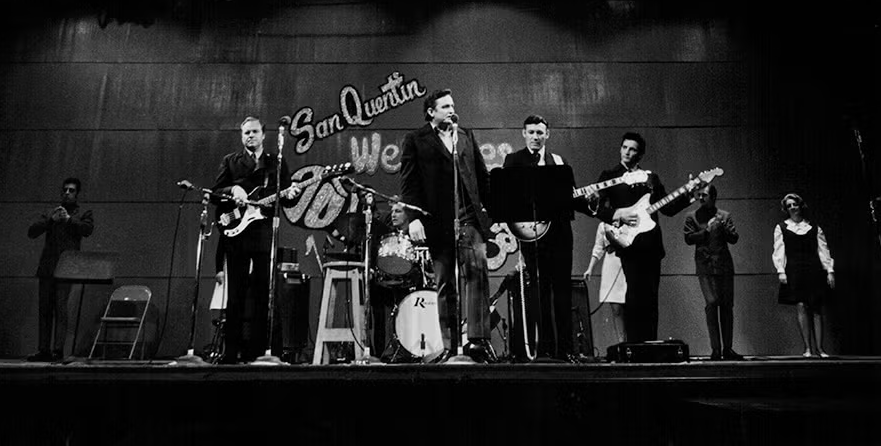

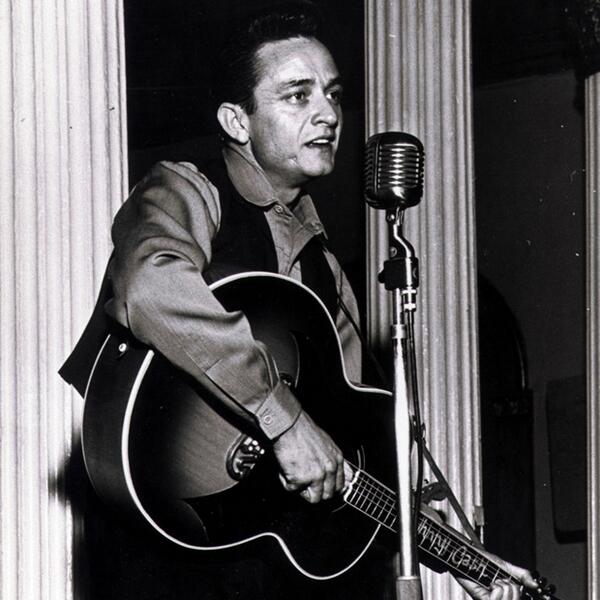
On January 1, 1959, Johnny Cash walked into San Quentin State Prison and did something no major artist had truly done before:
he played for inmates — not about them, not around them, but directly to them.
That performance didn’t just mark a concert date.
It ignited a tradition that would redefine Cash’s career, reshape live recording culture, and permanently link his voice to themes of confinement, redemption, and human dignity.
Music Behind Bars
Cash’s interest in prisons wasn’t a publicity stunt.
Raised on gospel, folk, and the hard truths of rural America, he was naturally drawn to stories of punishment, regret, and moral reckoning. Songs like “Folsom Prison Blues” weren’t fictional exercises — they were emotional bridges between the outside world and those forgotten behind walls.
After San Quentin, Cash continued playing in correctional facilities throughout the 1960s, developing a unique bond with incarcerated audiences. These shows were raw, loud, and deeply honest — free from the pretenses of mainstream venues.
From San Quentin to Legendary Albums
That connection culminated in two of the most important live albums in popular music history: At Folsom Prison and At San Quentin.
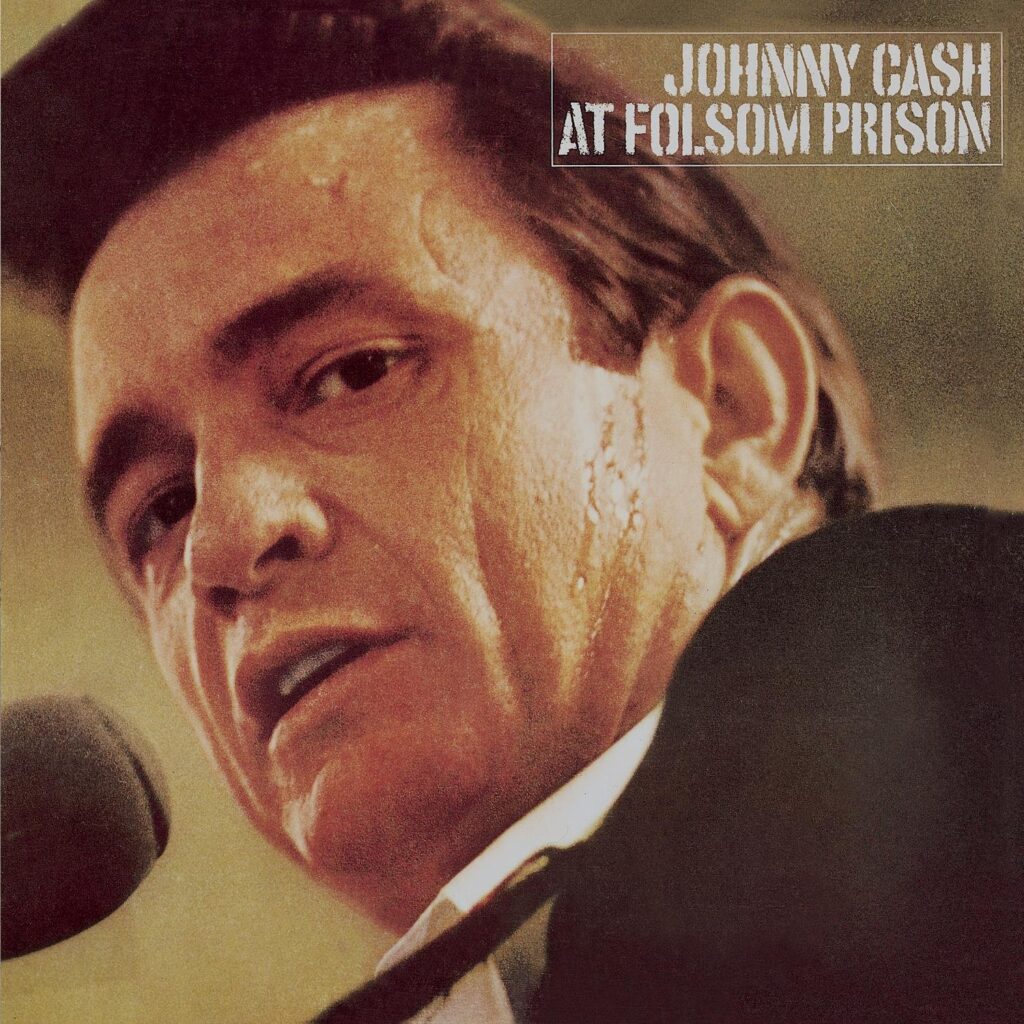
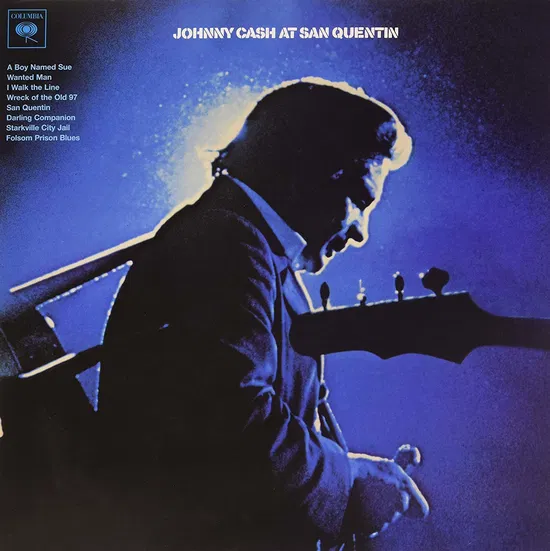
Recorded live inside prisons, these albums captured Cash at his most unfiltered.
No polish. No distance. Just tension, laughter, boos, cheers — and songs that felt alive.
At San Quentin in particular became iconic, featuring the explosive debut of “San Quentin”, a song so confrontational that Cash had to perform it twice due to the inmates’ reaction.
Merle Haggard: From Inmate to Icon
One of the most powerful threads in this story involves Merle Haggard.
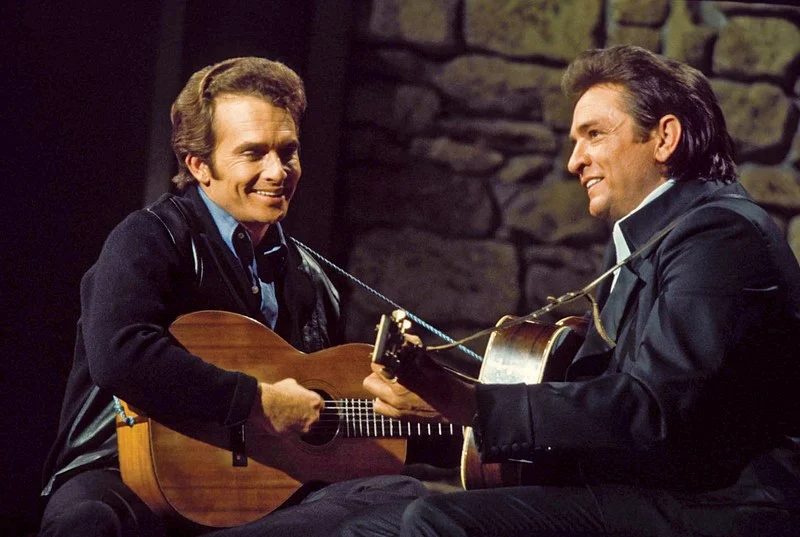
In 1959, when Cash first played San Quentin, Haggard was serving time there.
Watching Cash perform had a profound impact on him. Years later, Haggard would emerge as one of country music’s most important voices — often exploring the same themes of regret, class, authority, and freedom.
The fact that Cash and Haggard would eventually share stages, songs, and mutual respect feels almost mythic — a closed circle where influence becomes legacy.
More Than Concerts
Johnny Cash didn’t romanticize prison life.
He humanized it.
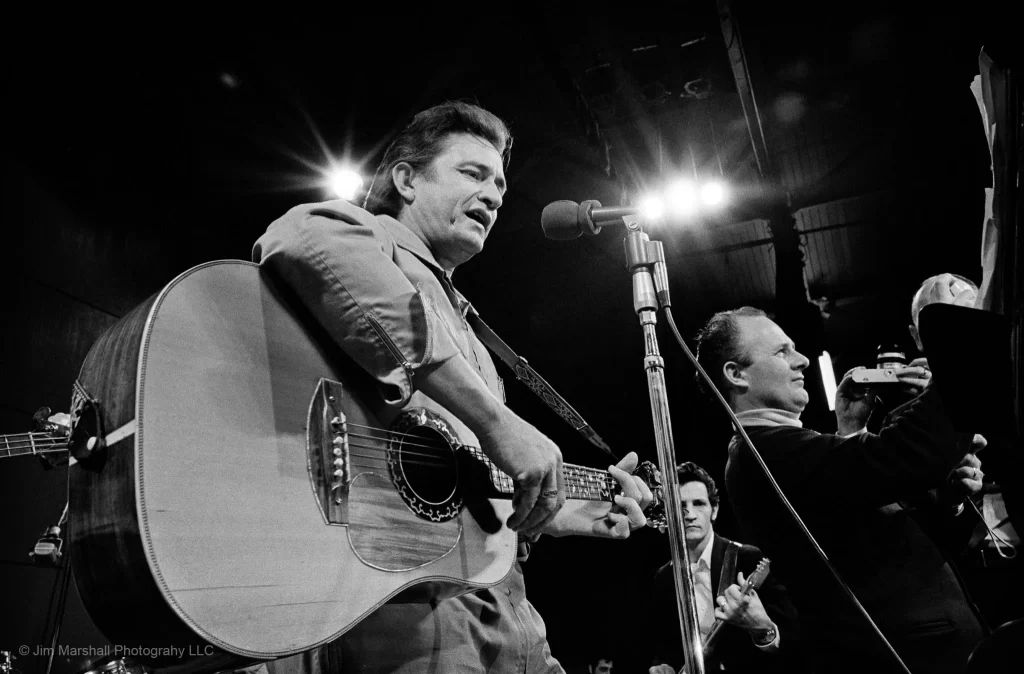
By stepping inside those walls, he forced audiences outside them to confront uncomfortable realities — about justice, punishment, and compassion. His prison concerts weren’t charity acts; they were acts of solidarity.
Cash once said he saw himself in the inmates.
Not as a criminal — but as a flawed human being searching for grace.
A Tradition That Endures
Today, prison concerts are part of music history, but they are rarely matched in sincerity or cultural impact. Cash’s willingness to blur the line between performer and audience made these shows timeless.
More than sixty years later, those echoes still ring — not just in country music, but in every artist who believes music should speak for those without a voice.
Why This Story Still Matters
Because it reminds us that music isn’t just entertainment.
At its best, it’s a mirror — and sometimes, a lifeline.